23 Simple Toddler Activities Under 2 That Support Early Growth
The first two years of a child’s life are filled with rapid growth, learning, and discovery. During this stage, toddlers develop important skills through everyday experiences, movement, play, and interaction with the people around them. Simple activities can help strengthen coordination, communication, problem-solving abilities, and curiosity while making learning fun and engaging.
Supporting early growth does not require expensive toys or structured lessons. Many valuable learning opportunities come from simple games and hands-on experiences using everyday household items. These activities encourage toddlers to explore their environment, build confidence, and develop essential skills that support healthy growth and future learning.
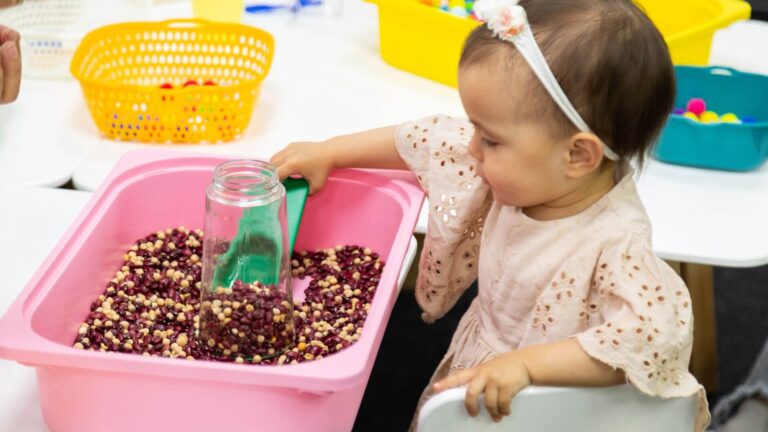
1. Sensory Treasure Basket

Fill a basket with safe objects that have different textures, shapes, and materials. Toddlers enjoy touching, holding, and exploring each item.
The activity encourages sensory development and curiosity. It also helps children learn through hands-on exploration and observation.
2. Ball Rolling Game

Sit on the floor and roll a ball back and forth with your toddler.
The simple game encourages interaction and movement. Rolling the ball helps develop hand-eye coordination and visual tracking skills. It also introduces early social skills such as turn-taking.
3. Stacking Cup Tower

Plastic cups are perfect for stacking into towers and knocking down. Toddlers enjoy experimenting with different heights and arrangements.
The activity supports fine motor development and problem-solving.
Rebuilding towers encourages persistence and learning through repetition.
4. Peekaboo Scarf Play

Use a lightweight scarf to play peekaboo with your toddler. Hiding and revealing faces creates excitement and laughter. The activity helps children understand object permanence. It also supports social interaction and early cognitive development.
5. Water Cup Exploration

Provide a few cups and a shallow container of water for supervised play. Toddlers enjoy filling, pouring, and splashing while exploring how water moves.
The activity strengthens coordination and introduces simple science concepts. It also provides rich sensory experiences.
6. Picture Book Conversations

Reading picture books together encourages language growth and communication. Pointing to images and naming objects helps build vocabulary.
Children enjoy interacting with colorful illustrations and familiar words. Regular reading also supports attention and listening skills.
7. Pillow Obstacle Course

Arrange pillows on the floor to create a simple obstacle course.
Toddlers can crawl, climb, and explore different ways to move through the space.
The activity develops balance, coordination, and muscle strength. It also encourages confidence and active exploration.
8. Toy Animal Sound Game

Use toy animals to introduce names and sounds. Toddlers enjoy hearing and repeating simple animal noises.
The activity supports language development and memory skills. It also encourages imaginative play and interaction.
9. Laundry Basket Push Walk

An empty laundry basket can provide support for toddlers who are learning to walk. Pushing the basket encourages movement and exploration.
The activity strengthens leg muscles and improves balance. Children gain confidence as they practice moving independently.
10. Bubble Wrap Crawl Path

Place a sheet of bubble wrap securely on the floor and encourage toddlers to crawl across it. The popping sounds and unique texture create an exciting sensory experience.
The activity supports sensory development and gross motor skills. Children also enjoy discovering how their movements create different sounds.
11. Sock Matching Basket

Gather a few pairs of colorful socks and encourage toddlers to find matching pairs.
Children enjoy comparing colors, patterns, and sizes. The activity strengthens observation skills and early problem-solving abilities. It also introduces simple sorting concepts through play.
12. Balloon Keep-Up Game

A balloon floats slowly enough for toddlers to follow and tap. Children enjoy chasing it around while trying to keep it moving.
The activity encourages movement, balance, and hand-eye coordination. It also supports visual tracking and active play.
13. Toy Basket Fill and Empty

Toddlers naturally enjoy placing toys into baskets and taking them back out again.
This repetitive activity keeps little hands busy and engaged.
The activity develops fine motor skills and introduces concepts such as full and empty.
It also encourages independent exploration.
14. Crayon Scribble Station

Provide large crayons and paper for supervised drawing time. Toddlers enjoy making marks and experimenting with colors.
The activity strengthens hand muscles and supports creativity. It also introduces early pre-writing skills through playful exploration.
15. Follow the Flashlight

Move a flashlight beam slowly across the floor and encourage toddlers to follow it. The moving light captures attention and sparks curiosity.
The activity improves visual tracking and coordination.
Crawling or walking after the light also encourages physical development.
16. Kitchen Container Stack

Plastic bowls and containers can become fun stacking toys. Toddlers enjoy arranging them into towers and watching them fall.
The activity develops problem-solving skills and hand-eye coordination. It also encourages experimentation with size and balance.
17. Music and Clapping Time

Play simple songs and encourage toddlers to clap along with the rhythm. Music naturally captures their attention and encourages participation.
The activity supports listening skills, coordination, and language development. Repetitive songs also help strengthen memory.
18. Toy Rescue Box

Place favorite toys inside a box filled with soft fabric or paper and encourage toddlers to find them. Children enjoy digging and discovering hidden treasures.
The activity promotes curiosity and sensory exploration.
It also strengthens problem-solving and fine motor skills.
19. Shape Block Exploration

Shape blocks provide opportunities for toddlers to explore different forms and sizes. Children can stack, sort, and compare the pieces.
The activity supports cognitive development and hand-eye coordination. It also introduces early concepts related to shapes and spatial awareness.
20. Scarf Pull Box Activity

Fill an empty tissue box with colorful scarves and let toddlers pull them out one at a time. The flowing movement and bright colors make the activity exciting and engaging.
Pulling the scarves helps strengthen fine motor skills and hand coordination.
Toddlers also learn about cause and effect as they discover more scarves hidden inside the box.
21. Rolling Pin Exploration

A lightweight rolling pin can become a fun learning tool for toddlers. Children enjoy pushing it across the floor and watching how it moves.
The activity encourages hand-eye coordination and curiosity. It also introduces simple concepts related to motion and direction through playful exploration.
22. Stuffed Animal Picnic

Arrange a pretend picnic with stuffed animals, toy dishes, and soft snacks.
Toddlers enjoy serving food and caring for their toy friends.
This activity supports imaginative play and social development. It also encourages language growth as children practice simple words and actions during play.
23. Nature Sound Listening Walk

Take a short walk outdoors and encourage toddlers to listen for birds, wind, leaves, or other sounds. Pointing out different noises helps them become more aware of their surroundings.
The activity supports listening skills and sensory development. It also encourages curiosity and appreciation for the natural world through simple everyday experiences.
Simple activities during the toddler years can have a meaningful impact on early development. Through play, exploration, and everyday interactions, children build important physical, cognitive, language, and social skills that support lifelong learning.
Even the simplest games can provide valuable opportunities for growth when they encourage curiosity and engagement.
By incorporating easy activities into daily routines, parents and caregivers can create a nurturing environment that supports healthy development. These playful experiences help toddlers gain confidence, strengthen essential skills, and discover the joy of learning through exploration and fun.