23 Easy Toddler Activities Using Everyday Household Items
You do not need expensive toys or elaborate setups to keep toddlers entertained and learning. Many of the best activities can be created using everyday household items that are already available at home.
Simple objects such as cups, spoons, boxes, scarves, and laundry baskets can become exciting learning tools that encourage creativity, movement, and exploration.
1. Colander and Pipe Cleaner Threading

A kitchen colander and colorful pipe cleaners can become a fascinating activity for toddlers. Children enjoy pushing the pipe cleaners through the holes and pulling them back out again.
The activity strengthens finger muscles and improves hand-eye coordination. It also encourages concentration as toddlers explore different ways to thread the materials.
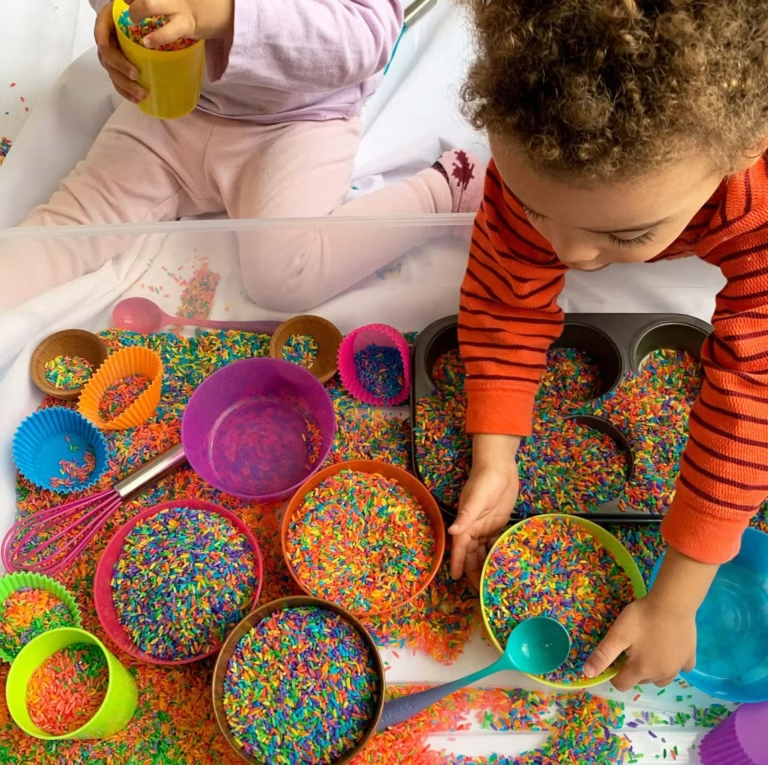
2. Muffin Tin Treasure Sort

Place safe household objects such as large blocks, toy animals, or balls into a muffin tin.
Toddlers enjoy moving items from one section to another.
This activity encourages sorting and observation skills. It also helps children practice grasping and placing objects with control.
3. Painter’s Tape Peel Station

Stick strips of painter’s tape on a wall, table, or floor and encourage toddlers to peel them off. The challenge keeps little hands busy and engaged.
Peeling tape strengthens fine motor skills and finger coordination.
It also provides a satisfying sensory experience.
4. Salad Spinner Discovery

A clean salad spinner can become an exciting exploration tool. Toddlers enjoy pressing, spinning, and watching the basket move.
The activity introduces cause-and-effect concepts. It also encourages curiosity about movement and motion.
5. Clothespin Drop Bucket

Provide a container and several large clothespins for toddlers to drop inside. Children enjoy hearing the sound each time a clothespin lands. The activity develops hand control and coordination. It also helps strengthen important fine motor muscles.
6. Paper Towel Tube Ball Roll

Hold a paper towel tube at an angle and let toddlers roll soft balls through it. Watching the ball travel through the tube creates excitement.
The activity encourages visual tracking and curiosity. It also introduces basic ideas about movement and direction.
7. Pot Lid Matching Game
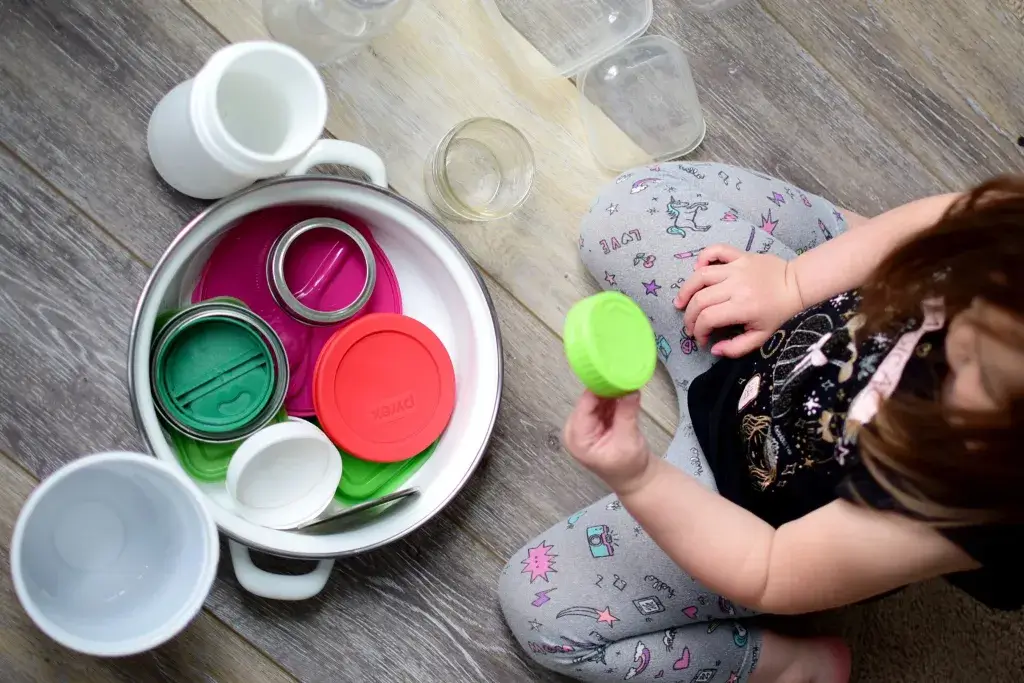
Gather several pots and matching lids and let toddlers find which lid fits each pot. Children enjoy experimenting until they find the correct match.
The activity develops problem-solving and observation skills. It also supports hand-eye coordination through hands-on exploration.
8. Sponge Block Building

Clean kitchen sponges make excellent lightweight building blocks. Toddlers can stack them, balance them, and knock them over safely.
The activity encourages creativity and coordination.
It also helps children explore balance and structure through play.
9. Flashlight Shadow Hunt

In a dim room, use a flashlight to create shadows on walls and floors.
Toddlers enjoy following the shadows and watching them move.
The activity stimulates curiosity and visual awareness. It also introduces simple concepts about light and shadow.
10. Reusable Food Container Tower

Empty food storage containers can be stacked into tall towers. Toddlers enjoy testing how high they can build before the tower tumbles.
The activity supports fine motor development and problem-solving. It also encourages experimentation and persistence through playful learning.
11. Egg Carton Ball Drop

An empty egg carton can become a simple sorting and dropping game.
Toddlers enjoy placing large pom-poms or soft balls into each compartment. The activity develops hand-eye coordination and finger control. It also introduces counting and matching opportunities during play.
12. Whisk and Ribbon Pull

Thread colorful ribbons through the loops of a kitchen whisk and let toddlers pull them out.
The challenge keeps little hands busy while creating a fun sensory experience. This activity strengthens fine motor skills and concentration.
It also encourages problem-solving as children figure out how to remove the ribbons.
13. Ice Cube Rescue Mission

Freeze small safe toys inside large ice cubes and let toddlers explore them under supervision. Children enjoy watching the ice melt and discovering the hidden treasures.
The activity introduces concepts about temperature and change. It also encourages curiosity and sensory exploration.
14. Cookie Cutter Shape Hunt

Give toddlers a collection of cookie cutters and encourage them to find matching shapes around the house. Everyday objects become part of an exciting search game.
The activity builds shape recognition and observation skills.
It also turns household exploration into a fun learning experience.
15. Tissue Paper Pull Basket

Fill a basket with colorful tissue paper and allow toddlers to pull, crinkle, and explore it. The bright colors and sounds keep children engaged.
The activity supports sensory development and fine motor skills. It also encourages creative exploration through touch and sound.
16. Magnetic Fridge Discovery

Large toddler-safe magnets can turn the refrigerator into a learning station.
Children enjoy moving magnets around and creating simple arrangements.
The activity develops hand coordination and problem-solving skills. It also introduces colors, shapes, and basic vocabulary.
17. Paper Plate Spin Game

Paper plates can be spun across the floor for toddlers to chase and retrieve.
Watching the plates move in different directions creates excitement.
The activity supports gross motor development and visual tracking. It also encourages active movement and curiosity.
18. Basket and Scarf Hideaway

Place toys under scarves inside a basket and encourage toddlers to find them. The surprise element keeps children interested and engaged.
The activity supports memory and problem-solving skills. It also helps toddlers understand that objects still exist even when they cannot be seen.
19. Citrus Fruit Rolling Race

Use oranges, lemons, or other round fruits for a simple rolling activity. Toddlers enjoy pushing them across the floor and watching how they move.
The activity encourages hand-eye coordination and visual tracking. It also introduces children to different shapes, sizes, and natural objects.
20. Cupboard Safe Item Explorer

Create a toddler-safe cupboard filled with lightweight kitchen items such as plastic bowls, measuring spoons, and containers.
Children love discovering and examining the contents.
The activity encourages independent exploration and curiosity. It also supports sensory development through hands-on learning.
21. Ping Pong Tube Drop

Tape cardboard tubes to a wall at different angles and let toddlers drop ping pong balls through them. Watching the balls travel creates excitement and wonder.
The activity introduces cause and effect while encouraging observation.
It also helps develop coordination and problem-solving skills.
22. Paintbrush and Water Art

Give toddlers a paintbrush and a container of water.
They can paint fences, walls, patios, or cardboard and watch the water disappear as it dries.
The activity encourages creativity and sensory exploration. It also develops fine motor skills without creating a mess.
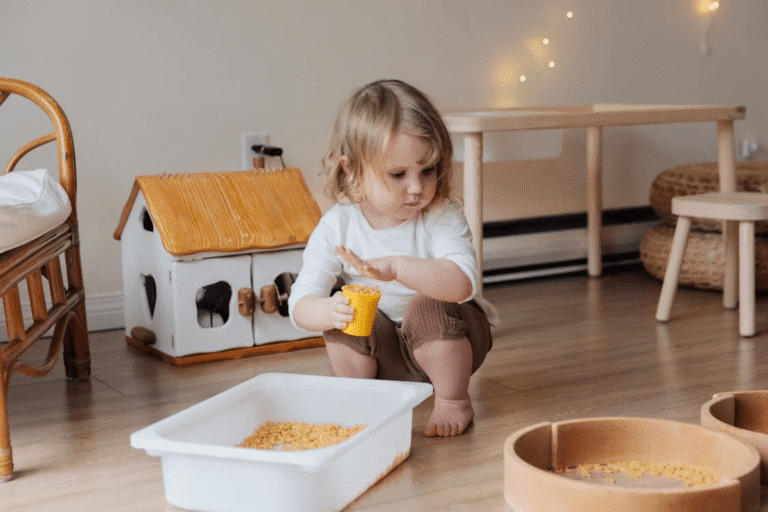
23. Measuring Spoon Scoop Station

Provide measuring spoons and a container filled with large safe objects. Toddlers enjoy scooping and transferring items between bowls.
The activity strengthens hand muscles and coordination. It also introduces concepts related to size and quantity.
Everyday household items can become valuable learning tools when viewed through a toddler’s eyes. Simple objects such as cups, baskets, cardboard tubes, measuring spoons, and kitchen tools provide endless opportunities for exploration, creativity, and skill development. These hands-on activities encourage toddlers to experiment, discover, and learn while having fun in a familiar environment.
The beauty of household-item activities is their simplicity and accessibility. They help support fine motor skills, gross motor development, problem-solving, sensory exploration, and early learning without requiring expensive toys or complicated preparations. By turning ordinary objects into playful learning experiences, parents and caregivers can create meaningful moments that keep little ones engaged, curious, and excited to explore the world around them.