15 Sensory Toddler Activities Under 2 Using Everyday Household Items
Keeping little ones entertained while supporting their early development does not require expensive toys or complicated setups. Many of the best sensory activities can be created using simple items you already have around the house, making playtime both fun and budget-friendly.
Sensory play helps toddlers explore different textures, sounds, colors, and movements while strengthening important skills such as coordination, curiosity, and problem-solving. These hands-on experiences encourage learning through discovery and can keep young children happily engaged for longer periods.
From water play to texture exploration, everyday household items can become exciting tools for growth and creativity. Here are 15 sensory toddler activities under 2 that are easy to set up and enjoyable for both children and parents.
1. Fabric Texture Basket

Fill a basket with fabric pieces such as cotton, fleece, satin, and towels. Toddlers enjoy touching and comparing the different textures with their hands and fingers.
The activity encourages sensory exploration while helping children learn about soft, smooth, rough, and fuzzy surfaces. Caregivers can introduce descriptive words during play to support language development.
2. Wooden Spoon and Pot Band

Kitchen pots and wooden spoons create a fun sensory music experience. Toddlers can tap different surfaces and listen to the sounds they make.
Exploring sound helps develop listening skills and introduces the concept of cause and effect. Children quickly learn that different objects produce different noises.
The activity also encourages movement and coordination while providing plenty of entertainment.
3. Water and Cup Exploration

Water play offers endless sensory experiences for young toddlers. Provide a few cups and a shallow container of water for supervised exploration.
Children enjoy pouring, splashing, and watching water move from one container to another. These observations help support sensory awareness and early scientific thinking.
The activity also strengthens hand-eye coordination through simple movements and experimentation.
4. Crinkly Paper Discovery

Large sheets of safe crinkly paper create exciting sounds and textures for toddlers to explore. Children can squeeze, crumple, and touch the material while discovering how it feels and sounds.
The activity stimulates multiple senses at once and encourages curiosity. Exploring new textures helps support sensory processing and development.
5. Ice Cube Observation Tray

Place a few ice cubes in a tray and let toddlers safely touch and observe them. The cold temperature provides a new sensory experience that captures their attention.
Children notice how the ice feels and watch it slowly melt over time. This introduces simple concepts about temperature and change.
Talking about what they see and feel can help build vocabulary during play.
6. Rice Spoon Transfer

Fill a container with uncooked rice and provide a large spoon for supervised play. Toddlers enjoy scooping, pouring, and listening to the sounds the rice makes.
The activity offers rich sensory input while strengthening fine motor skills. Children also explore volume and movement as they transfer rice between containers.
Different cups and bowls can make the activity even more engaging.
7. Mirror Face Exploration

A child-safe mirror provides endless opportunities for sensory and social learning.
Toddlers enjoy observing their reflections and making different facial expressions.
The activity encourages self-awareness and visual exploration. Children begin noticing how their movements affect what they see in the mirror. Caregivers can point out facial features and emotions to support language development.
8. Bubble Foam Play
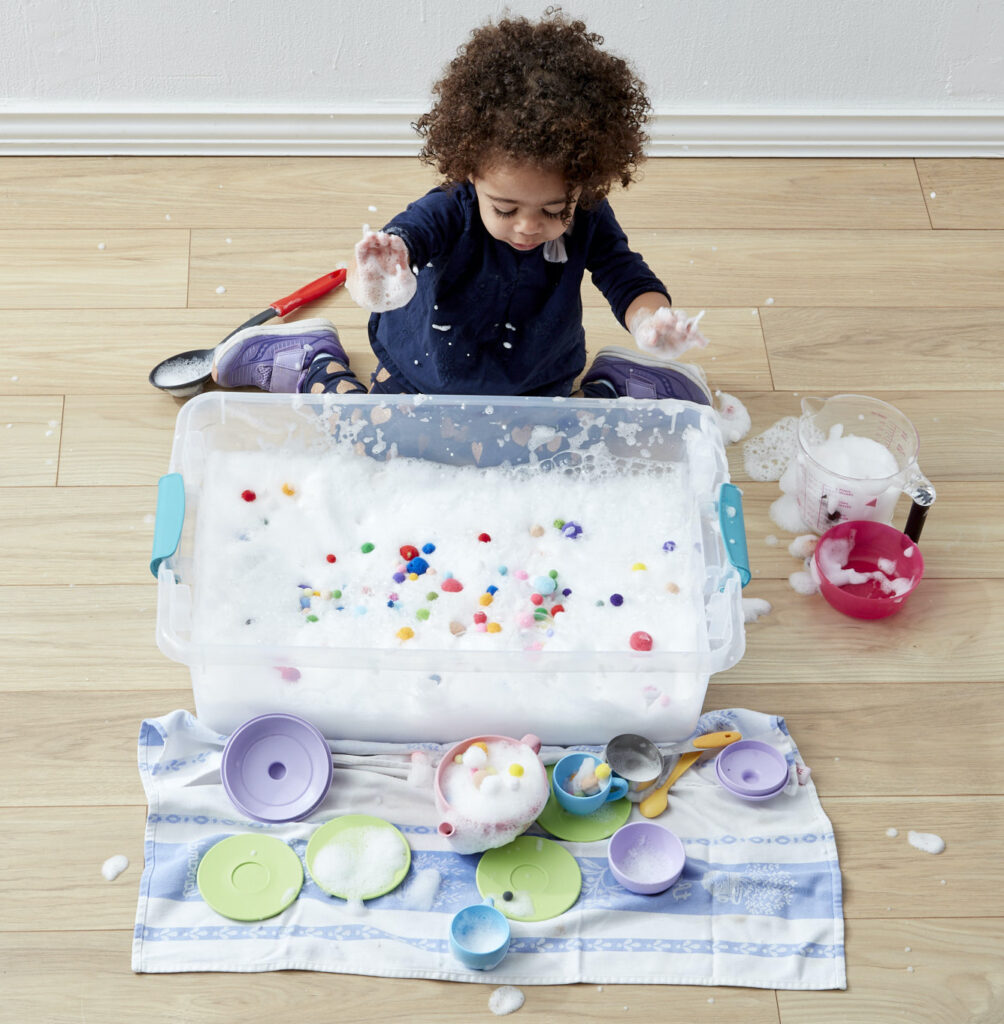
Create a small amount of foam using child-safe soap and water for supervised sensory play. Toddlers enjoy touching, squeezing, and spreading the soft bubbles.
The unique texture encourages exploration and curiosity. Children use their hands to investigate how the foam feels and moves.
Sensory activities like this help support creativity, fine motor development, and hands-on learning.
9. Sponge Squeeze Water Play

Give toddlers a soft sponge and a shallow container of water. They will enjoy dipping the sponge into the water and squeezing it over another bowl or tray.
The activity provides a rich sensory experience while strengthening hand muscles. Watching the water drip and flow also helps children learn about cause and effect.
10. Aluminum Foil Exploration

A sheet of aluminum foil offers a unique sensory experience through its shiny appearance and crinkly texture. Toddlers enjoy touching, folding, and listening to the sounds it makes.
The activity stimulates both visual and tactile senses. Exploring new materials helps children become more aware of different textures and sensations.
Simple household items can often provide the most interesting learning opportunities.
11. Sock Texture Hunt

Gather socks made from different materials and let toddlers explore them. Thick, thin, fuzzy, and smooth socks all provide unique sensory experiences.
Children can touch, squeeze, and compare the textures while learning new descriptive words. The activity supports both sensory awareness and language development.
12. Bubble Wrap Hand Press

Bubble wrap provides a satisfying sensory experience that many toddlers enjoy. Pressing the bubbles with their hands creates sounds and textures that encourage exploration.
The activity strengthens finger muscles and improves hand coordination. Children also learn through experimentation as they discover how much pressure is needed to pop the bubbles.
Sensory experiences like this help keep toddlers engaged while supporting development.
13. Measuring Cup Water Pouring

Provide measuring cups and a small amount of water for supervised play. Toddlers enjoy filling, pouring, and transferring water between containers.
The activity supports sensory development while improving hand-eye coordination. Children also begin noticing differences in container sizes and water levels.
14. Cardboard Tube Sound Play

Cardboard tubes from paper towels or wrapping paper can become simple sensory toys. Toddlers enjoy tapping them on different surfaces and listening to the sounds they create.
Children may also look through the tubes, roll them, or explore their shape and texture. These experiences encourage curiosity and discovery.
The activity supports sensory learning while using materials that are commonly found at home.
15. Feather Touch Exploration

Soft feathers provide a gentle sensory experience for toddlers. Children enjoy feeling the light texture against their hands, arms, and cheeks.
The activity encourages awareness of different sensations and textures. Talking about how the feather feels helps build descriptive vocabulary and communication skills.
Simple sensory experiences like this encourage toddlers to observe, explore, and learn through touch.
Sensory play is an important part of early childhood development, especially during the first two years of life. Toddlers learn about their surroundings by touching, listening, watching, and exploring different materials. These everyday experiences help strengthen brain connections while supporting language development, coordination, problem-solving, and curiosity. Sensory activities also encourage children to engage with their environment in a hands-on and meaningful way.
The great thing about sensory play is that it does not require expensive toys or special equipment. Many of the best activities can be created using simple household items already available at home. From exploring textures and sounds to experimenting with water and movement, these sensory activities provide fun opportunities for learning and discovery while supporting your toddler’s early growth and development.
Sensory activities help toddlers under 2 explore their environment through touch, sound, sight, and movement. Using everyday household items makes it easy to create meaningful learning experiences without needing special equipment or expensive toys. These simple activities encourage curiosity while supporting important developmental skills.
By providing regular opportunities for sensory play, parents and caregivers can help toddlers build confidence, strengthen coordination, and develop a deeper understanding of the world around them. Through everyday exploration and discovery, young children learn valuable skills that support healthy growth and future learning.