21 Toddler Activities for 3 Year Olds That Make Learning Fun Every Day
Three-year-olds are full of energy, imagination, and curiosity. At this age, children learn best through hands-on activities that encourage exploration, creativity, movement, and problem-solving.
Simple play experiences can help strengthen important skills while making learning feel exciting and enjoyable every day.
1. Rainbow Water Transfer Challenge

Fill several clear cups with different colored water and provide a turkey baster or large dropper.
Children enjoy transferring water between containers and creating new color combinations.
The activity strengthens hand muscles and coordination. It also introduces basic science concepts through observation and experimentation.
2. Giant Shape Hop Game

Create large paper shapes and place them around the room. Invite children to hop to a circle, jump to a square, or walk to a triangle.
The activity encourages movement while reinforcing shape recognition. It also helps develop listening and gross motor skills.
3. Nature Bracelet Adventure

Wrap tape around a child’s wrist with the sticky side facing outward. During a walk, children can collect leaves, flower petals, and small natural treasures to decorate their bracelet.
The activity promotes observation and creativity.
It also encourages outdoor exploration and appreciation of nature.
4. Alphabet Parking Lot

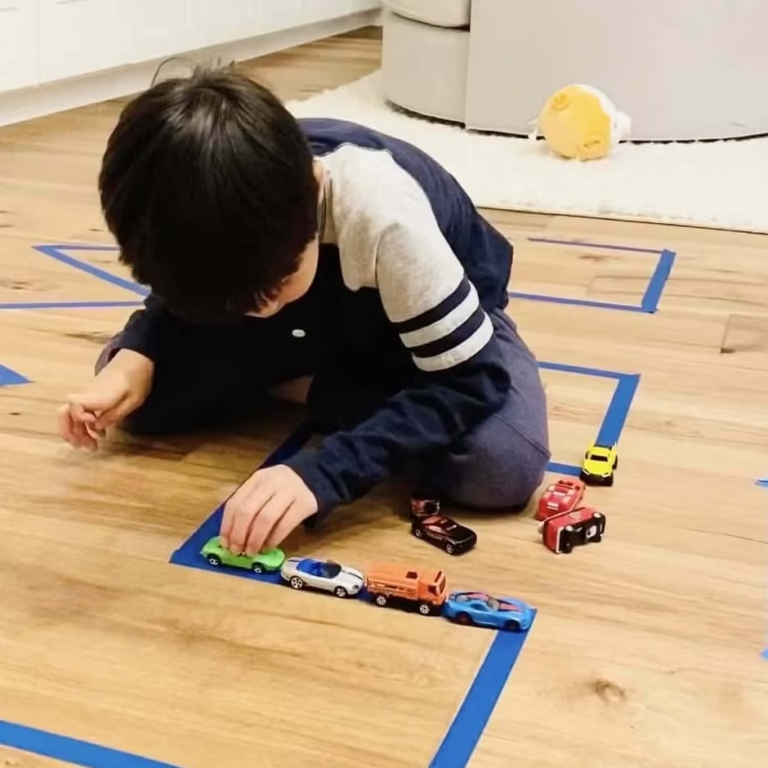
Draw parking spaces labeled with letters on a large piece of cardboard. Children can park toy cars in the matching letter spaces.
The activity introduces letter recognition through play. It also supports problem-solving and fine motor development.
5. Sponge Block Construction Site

Provide clean kitchen sponges in different sizes for building towers, bridges, and structures.
Children enjoy experimenting with balance and design.
The activity encourages creativity and engineering thinking. It also strengthens coordination and concentration.
6. Mystery Sound Detective

Hide objects that make sounds such as keys, bells, or crinkled paper inside containers. Children listen carefully and try to guess what is making the noise.
The activity develops listening skills and critical thinking. It also encourages curiosity and sensory exploration.
7. Animal Footprint Painting

Use toy animal feet dipped lightly in washable paint to create tracks on paper.
Children can compare the different prints and create stories about where the animals traveled.
The activity combines creativity with observation skills. It also encourages imaginative thinking and artistic expression.
8. Treasure Map Adventure

Create a simple treasure map with pictures showing where hidden objects can be found. Children enjoy following clues and searching for treasures.
The activity promotes problem-solving and memory skills.
It also encourages independent exploration and confidence.
9. Color Mixing Ice Lab

Freeze colored water into ice cubes and place them in a tray. Children can move the cubes around and observe how colors mix as the ice melts.
The activity introduces basic science concepts and sensory exploration. It also encourages creativity and observation through hands-on discovery.
10. Color Shadow Window Play

Tape colorful transparent sheets to a sunny window and encourage children to look through them. They will enjoy watching how everyday objects appear in different colors.
The activity supports visual exploration and creativity. It also introduces simple concepts about light and color.
11. Toy Rescue From Tape Web

Create a tape web across a box opening and place toys inside. Kids can carefully remove the toys without tearing the tape.
The activity strengthens fine motor skills and problem-solving abilities.
It also encourages persistence and concentration.
12. Giant Chalk Road Town

Draw roads, buildings, and parks with sidewalk chalk. Children can drive toy vehicles through their handmade town.
The activity encourages imagination and storytelling. It also supports spatial awareness and creative thinking.
13. Muffin Tin Color Hunt

Place colored paper circles inside a muffin tin and ask children to find matching objects around the house.
The activity develops color recognition and observation skills.
It also encourages movement and exploration.
14. Nature Paintbrush Creations

Use leaves, grass, and small branches as paintbrushes. Children enjoy discovering the different patterns each natural item creates.
The activity promotes creativity and sensory exploration. It also encourages appreciation for nature.
15. Balloon Tennis Fun

Create simple paddles from paper plates and let children hit a balloon back and forth.
The activity improves coordination and balance. It also keeps children active while having fun.
16. Sticker Path Adventure

Place colorful stickers on the floor to create a path for jumping, tiptoeing, or marching.
The activity supports gross motor development and listening skills. It also turns movement into an exciting game.
17. Floating Paper Boat Harbor

Fill a container with water and float simple paper boats.
Children can gently blow on the boats and observe how they move.
The activity introduces early science concepts and observation skills. It also encourages imaginative play.
18. Cardboard Tube Marble Watch

Tape cardboard tubes to a wall and let children drop large safe balls through them. Watching the path of the balls creates excitement and curiosity.
The activity supports problem-solving and visual tracking. It also introduces cause-and-effect learning in a playful way.
19. Pretend Bakery Play Station

Provide play dough, trays, and containers so children can pretend to run their own bakery. They can create cakes, cookies, and special treats.
The activity develops creativity and communication skills. It also encourages imaginative storytelling through role play.
20. Shadow Animal Theater

Use a flashlight and your hands to create simple animal shadows on a wall. Children can guess the animals and even try making their own shadow creations.
The activity encourages imagination and visual observation. It also supports communication skills through storytelling and pretend play.
21. Colorful Parachute Sheet Game

Use a lightweight bedsheet and place a few soft balls on top. Children can lift and shake the sheet to make the balls bounce and move.
The activity develops teamwork, coordination, and gross motor skills. It also creates excitement while encouraging active play and movement.
Learning becomes much more meaningful when it is combined with play, creativity, and exploration. Activities designed for 3-year-olds help build important skills such as problem-solving, coordination, communication, early literacy, and critical thinking while keeping children engaged and excited. Through hands-on experiences, little ones gain confidence as they discover new ideas and develop a better understanding of the world around them.
Simple activities using everyday materials can create countless opportunities for fun and learning at home. Whether children are building, sorting, creating art, exploring nature, or solving playful challenges, every activity encourages growth in a natural and enjoyable way. By making learning part of everyday play, parents and caregivers can help foster curiosity, independence, and a lifelong love of discovery.