24 Toddler Learning Activities That Support Language and Cognitive Growth
In this collection of 24 toddler learning activities that support language and cognitive growth, you’ll find fun and interactive ideas designed to spark conversation, build vocabulary, improve listening skills, and encourage critical thinking.
These activities help little learners develop essential foundations for future academic success while enjoying meaningful moments of play.
Parents, caregivers, and educators can easily incorporate these engaging experiences into everyday routines to support healthy development and a lifelong love of learning.
1. Storytime Picture Walks

Before reading a story, encourage toddlers to explore the pictures and talk about what they see. This simple activity helps children build vocabulary, make predictions, and strengthen observation skills.
As they describe characters, objects, and actions, they learn to connect words with images.
Picture walks also support cognitive growth by encouraging toddlers to think about what might happen next.
Asking open-ended questions keeps them engaged and helps develop communication skills. Over time, children become more confident expressing their ideas and understanding new concepts through books.
2. Animal Sound Matching
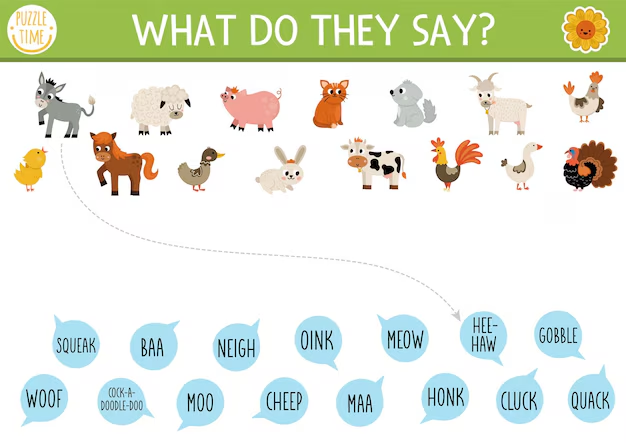
Animal sound matching is a fun way to build language skills while improving memory and listening abilities. Show toddlers pictures of animals and encourage them to identify the correct sounds.
As children connect sounds with animal names, they strengthen vocabulary and auditory recognition. The activity also encourages attention and concentration.
Repeating animal sounds can improve speech development while making learning playful and interactive. Toddlers often enjoy imitating familiar animals, which keeps them engaged throughout the activity.
3. Color Sorting Baskets

Sorting colorful objects into matching baskets helps toddlers learn color names while developing classification skills. Children begin to recognize similarities and differences as they organize items into groups.
This activity encourages cognitive growth by teaching early sorting and categorization concepts. Naming colors aloud during play also expands vocabulary and language understanding.
4. Nursery Rhyme Action Play

Nursery rhymes introduce toddlers to rhythm, repetition, and new vocabulary. Adding simple actions to songs helps children connect words with movements, making language easier to understand.
The repetition found in rhymes strengthens memory and listening skills. Children begin to anticipate familiar words and phrases as they sing along.
Action songs also support cognitive development by encouraging sequencing and recall. Toddlers learn while moving, singing, and having fun.
5. Object Naming Treasure Hunt

An object naming treasure hunt encourages toddlers to search for familiar items around the home or classroom.
As children locate objects, they practice identifying and naming them.
This activity expands vocabulary and helps toddlers understand how words relate to real-world items. It also strengthens memory as they remember what they are searching for.
Adding simple clues can increase the challenge and support problem-solving skills. The combination of movement and language learning keeps children actively engaged.
6. Shape Matching Games

Shape matching games help toddlers learn important early math and language concepts. Children identify circles, squares, triangles, and other shapes while building recognition skills.
Matching activities encourage careful observation and critical thinking. Toddlers compare shapes and decide where each piece belongs.
Talking about shape names during play reinforces vocabulary development. Over time, children become more comfortable identifying shapes in everyday environments.
7. Puppet Conversation Time

Puppets create exciting opportunities for language development and imaginative play. Toddlers often feel more comfortable speaking when interacting with a playful puppet character.
Puppets can ask questions, tell stories, and introduce different situations for discussion.
The activity also supports cognitive growth by encouraging imagination, memory, and creative thinking. Children learn to express themselves while having fun.
8. Simple Memory Card Matching

Memory matching games help toddlers strengthen attention, concentration, and recall skills. Children turn over cards and try to find matching pictures, encouraging them to remember locations and visual details.
The activity supports cognitive development by improving problem-solving and pattern recognition. Matching cards also provide opportunities to discuss colors, animals, shapes, or objects shown on the cards.
9. Alphabet Basket Exploration

Alphabet baskets filled with letter cards, foam letters, or magnetic letters introduce toddlers to early literacy concepts.
Children can touch, sort, and explore the letters while hearing their names and sounds.
Talking about letters during play helps expand vocabulary and supports language development. Toddlers begin recognizing familiar letters from their names and favorite books.
10. Mystery Bag Guessing Game

Place familiar objects inside a bag and encourage toddlers to feel each item before guessing what it might be. This activity stimulates curiosity and introduces descriptive language.
Children learn to talk about textures, shapes, and sizes as they describe what they feel. Using words such as soft, rough, round, or smooth helps expand vocabulary.
The guessing element also supports critical thinking and memory. Toddlers use clues to make predictions and connect sensory experiences with familiar objects.
11. Sequencing Picture Cards

Sequencing cards help toddlers understand the order of events. Children arrange pictures that show simple routines such as planting a flower, brushing teeth, or making a sandwich.
Discussing what happens first, next, and last builds language skills while encouraging logical thinking. Toddlers learn to organize information and understand cause-and-effect relationships.
12. Pretend Grocery Store

Pretend grocery stores encourage toddlers to use language in meaningful ways. Children name foods, ask for items, and engage in simple conversations while playing.
Role-playing helps build vocabulary related to everyday experiences. Toddlers learn the names of fruits, vegetables, and household products through hands-on exploration.
13. What Comes Next? Pattern Play

Creating simple patterns with blocks, buttons, or colored objects introduces toddlers to an important early math concept. Children learn to recognize and predict repeating sequences.
Identifying what comes next encourages observation and critical thinking. Toddlers begin noticing relationships between colors, shapes, and objects.
Pattern activities also strengthen attention skills. As children practice creating and extending patterns, they develop confidence in their reasoning abilities.
14. Sing-and-Repeat Word Games

Music is a powerful tool for language development. Sing-and-repeat games encourage toddlers to listen carefully and repeat new words, phrases, or simple sentences.
Adding actions or movements makes the activity even more engaging. Toddlers learn through hearing, speaking, and moving at the same time.
15. Family Photo Conversations

Family photo conversations help toddlers connect language with familiar people and experiences. Looking through pictures encourages children to identify family members and talk about memories.
Parents can ask simple questions about who is in the picture or what happened during a special event. These discussions support vocabulary growth and sentence formation.
The activity also strengthens memory and emotional connections. Children enjoy revisiting familiar moments while practicing communication skills.
16. Sorting by Category

Talking about the categories encourages language development and introduces new vocabulary. Toddlers learn to describe similarities and differences between objects.
This activity supports cognitive growth by strengthening classification and reasoning skills. It also encourages children to think more deeply about the world around them.
17. Daily Weather Talk

Talking about the weather is a simple activity that builds language and observation skills. Encourage toddlers to describe what they see outside using words such as sunny, cloudy, windy, or rainy.
Discussing weather each day supports cognitive growth by encouraging comparison, prediction, and reasoning. Toddlers learn to observe details while practicing communication skills.
18. Matching Everyday Objects

Gather pairs of familiar household objects and invite toddlers to find the matches. Children compare colors, shapes, and sizes while strengthening observation skills.
Matching activities help develop memory and visual discrimination. Toddlers learn to identify similarities and understand how objects relate to one another.
The activity also encourages language development as children describe the items they are matching. Naming objects repeatedly helps reinforce vocabulary.
19. Story Basket Exploration

A story basket contains objects related to a favorite book or story. As toddlers explore the items, they connect real objects to characters and events from the story.
This hands-on experience improves comprehension and supports vocabulary development. Children are often eager to discuss what they recognize and remember.
20. Opposites Learning Game

Teaching opposites introduces toddlers to important language concepts. Use everyday examples such as big and small, fast and slow, or hot and cold during play.
Children begin to understand how words can describe contrasting ideas. This strengthens vocabulary and improves comprehension.
The activity also supports cognitive growth by encouraging comparison and classification. Toddlers learn to recognize differences while expanding their understanding of language.
21. Picture Description Challenge

Show toddlers a picture and encourage them to talk about what they see. They may describe people, animals, objects, colors, or actions within the image.
This activity helps children practice sentence formation and vocabulary usage.
Asking simple questions can encourage longer responses and deeper thinking. Picture discussions also strengthen observation skills. Toddlers learn to pay attention to details and express their ideas more clearly.
22. Sink or Float Discovery

Sink or float activities introduce toddlers to early science concepts through hands-on exploration. Children make predictions before placing objects into water.
Observing the results encourages critical thinking and problem-solving. Toddlers begin understanding that different objects behave in different ways.
Talking about their observations builds language skills while supporting curiosity. The activity combines learning, experimentation, and discovery in an engaging format.
23. Name That Sound

Play different sounds such as a bell ringing, a dog barking, or water running and ask toddlers to identify them. Listening carefully helps strengthen auditory processing skills.
The game also builds attention and memory. Toddlers become more aware of the sounds around them and learn to focus on details.
24. Build and Describe Challenge

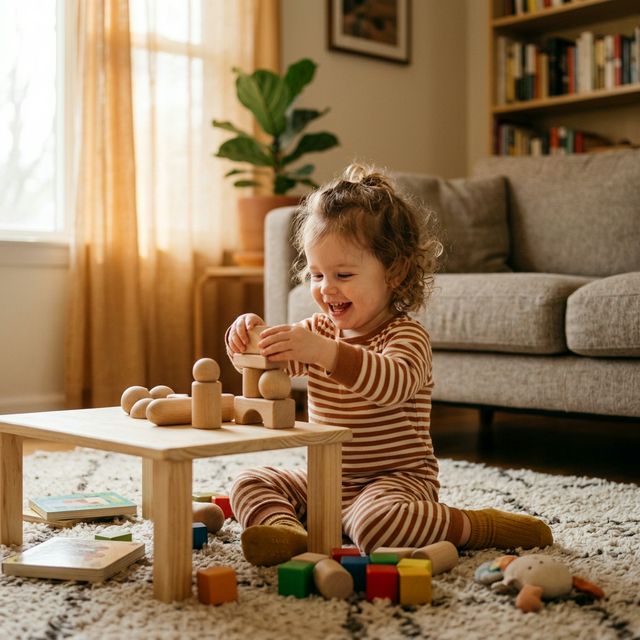
Invite toddlers to build something with blocks and then describe their creation. They can talk about colors, shapes, sizes, and what they have made.
Describing their work encourages language growth and helps children organize their thoughts. It also introduces new descriptive vocabulary in a natural way.
The building process supports problem-solving and creativity. Combining construction play with conversation creates a valuable learning experience that supports both language and cognitive development.
The toddler years are filled with curiosity, discovery, and rapid brain development. During this stage, children learn new words every day, begin forming sentences, recognize patterns, and develop the ability to solve simple problems. Engaging learning activities can support these important milestones while making learning feel natural and enjoyable.
Language and cognitive skills grow best through meaningful interactions, hands-on experiences, and playful exploration. Activities that encourage conversation, listening, memory, observation, and critical thinking help toddlers build a strong foundation for future learning. Whether through storytelling, sorting games, pretend play, or simple science experiments, these engaging activities can support your child’s development while creating fun opportunities to learn together.
Supporting language and cognitive growth does not require complicated lessons or expensive materials. Many of the most effective learning opportunities come from simple everyday activities that encourage toddlers to talk, listen, explore, and think. Through consistent play-based experiences, children gradually expand their vocabulary, improve memory, strengthen problem-solving skills, and develop confidence in expressing their ideas.
Every conversation, question, and discovery helps build important connections in a toddler’s growing brain. By providing a variety of engaging activities that promote communication and thinking skills, parents and caregivers can create a positive learning environment that nurtures curiosity and supports healthy development.
These early experiences lay the groundwork for future success in school and beyond while helping children develop a lifelong love of learning.